Dental Crowns: Why They Matter and How Same-Day Crowns Make Care Easier
November 22, 2026 · Biltmore Avenue Family Dentistry
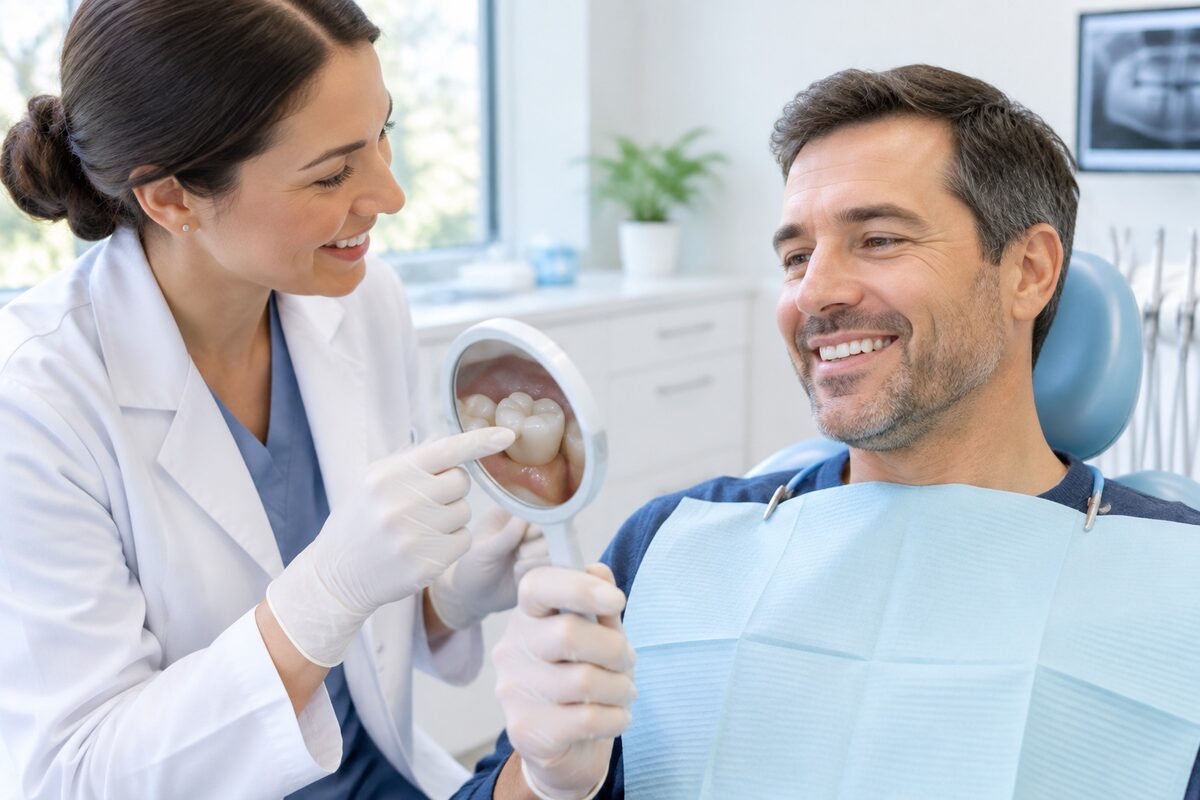
When your dentist recommends a crown, you may wonder: Is it really necessary, especially if the tooth doesn’t hurt? A dental crown is more than a cosmetic improvement. For a tooth weakened by decay, a large filling, or a fracture, it can be an important way to preserve your natural smile. At Biltmore Avenue Family Dentistry in Asheville, North Carolina, we also make most of our crowns in our office, often allowing patients to complete treatment in a single visit.
What Is a Dental Crown?
A crown is a custom-made covering that fits over the visible part of a tooth. It restores the tooth’s shape and chewing surface while protecting remaining tooth structure. The American Dental Association explains that crowns can strengthen teeth with large fillings, protect weakened teeth, and restore broken teeth. Crowns may also improve the appearance of a damaged or misshapen tooth.
Why Would I Need a Crown Instead of a Filling?
A filling replaces a smaller area of missing tooth structure. When a cavity is extensive or an old filling occupies much of the tooth, there may not be enough strong enamel and dentin left to support another filling. A crown covers the tooth and helps distribute biting forces. Your dentist will consider the amount of healthy tooth remaining, the location of the damage, and your bite before recommending a crown. Not every damaged tooth needs one; smaller problems may be treated with a filling or another conservative restoration.
What About Cracked Teeth?
A cracked tooth may cause pain when biting, discomfort when releasing pressure, or sensitivity to hot and cold foods. Sometimes symptoms come and go. According to the American Association of Endodontists, the treatment depends on the crack’s location and severity. Some superficial cracks require only monitoring, while a significant crack may need a crown to reduce the risk of further damage. A crown cannot guarantee that a crack will stop progressing, and deeply fractured teeth may not be restorable. An examination is the best way to determine the appropriate treatment.
Why Waiting Can Be Risky
A tooth can be weakened even when it feels comfortable. Continuing to chew on a compromised tooth may increase the chance of a fracture. If decay progresses into the pulp, root canal treatment may become necessary; in severe cases, the tooth may need extraction. That does not mean every untreated tooth will fail. It does mean that timely evaluation can preserve more treatment options. Treating a restorable tooth before additional damage occurs may also avoid the time and expense of more complex procedures later.
Same-Day Crowns: A More Convenient Option
Traditional crowns often involve two visits: one to prepare the tooth and take an impression, and another to place the laboratory-made crown. A temporary crown is usually worn between appointments. Modern in-office digital design and manufacturing can streamline this process. At Biltmore Avenue Family Dentistry, we make most of our crowns right here in the office, often completing the final restoration on the same day. For many patients, that means fewer appointments, less time away from work or family, and no extended wait with a temporary crown. Some complex cases still benefit from an outside dental laboratory or additional visits.
What Happens During the Appointment?
First, your dentist examines the tooth and discusses the recommended restoration. Local anesthetic is generally used to keep you comfortable while damaged tooth structure is removed and the tooth is prepared. The crown is then designed to fit your tooth and bite. When it is ready, your dentist checks the fit, contacts, and bite before securing it. The exact steps and appointment length depend on your individual treatment needs. Mild sensitivity afterward can occur, but many patients resume normal activities soon after their appointment.
How Long Will a Crown Last?
Crowns are durable restorations, but they are not permanent or immune to decay at their edges. Cleveland Clinic notes that many crowns last approximately five to fifteen years, with considerable variation based on materials, bite forces, and care. Brush twice daily with fluoride toothpaste, clean between your teeth every day, and attend regular dental visits. Avoid chewing ice or other very hard objects. If you grind your teeth, ask whether a nightguard could help protect your crown and natural teeth.
Protect Your Natural Smile in Asheville
A dental crown can restore comfort, function, and confidence while helping you keep a natural tooth. If you have a broken tooth, a large filling, discomfort when chewing, or have been told you may need a crown, our team can explain your options. And because we make most crowns in-office, treatment may be more convenient than you expect. Contact Biltmore Avenue Family Dentistry to schedule an evaluation and learn whether a same-day crown is right for you.