What Happens to a Cavity If You Ignore It for a Year?
June 22, 2026 · BlackbeltCommerce Collaborator
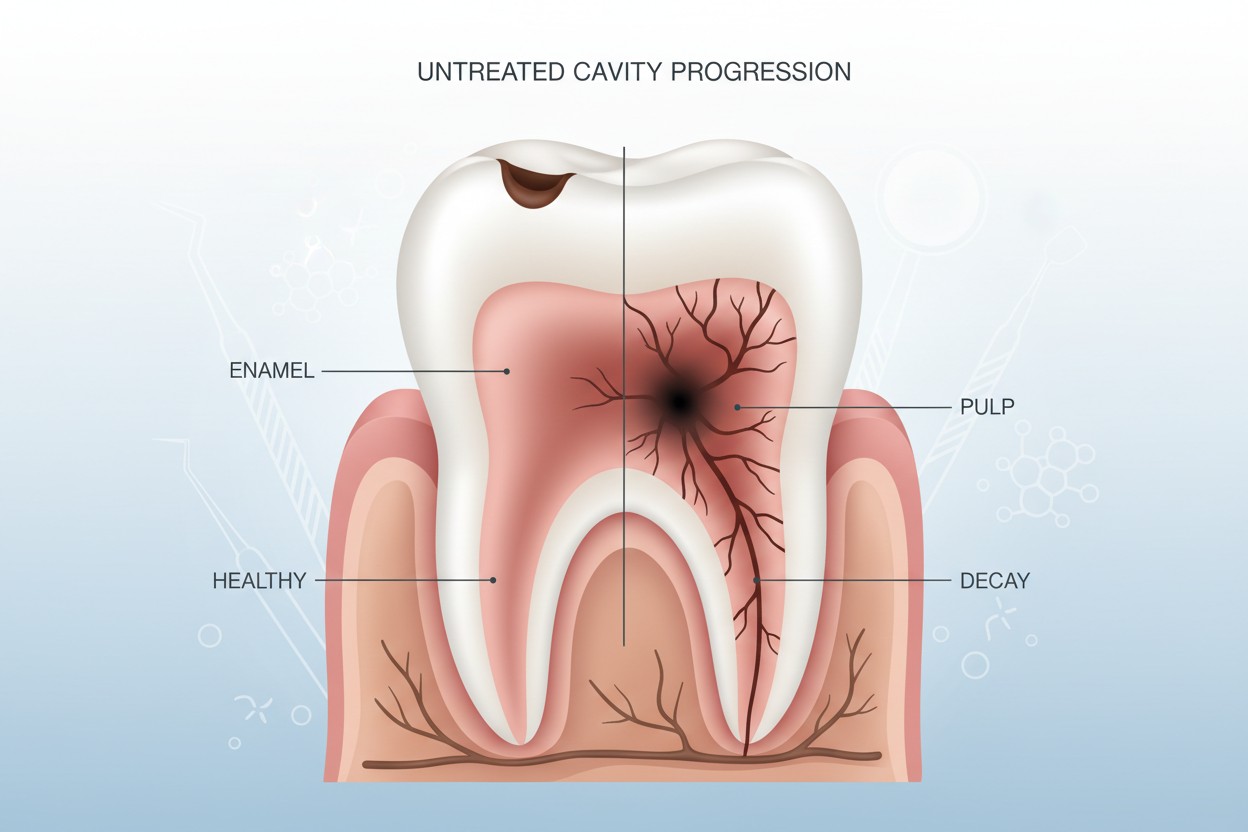
Most cavities don't hurt when they first develop. That's why many people postpone treatment, especially if they're busy, nervous about visiting the dentist, or simply hoping the problem will go away on its own.
But what actually happens if you ignore a cavity for a year?
The short answer: cavities do not heal themselves, and they almost always get worse over time. What starts as a small area of tooth decay can eventually lead to severe pain, infection, tooth loss, and more expensive dental treatment.
Let's take a closer look at how a cavity progresses when left untreated.
Can a Cavity Go Away on Its Own?
One of the most common dental myths is that a cavity can heal naturally.
While very early enamel damage can sometimes be slowed or remineralized with proper oral care, a true cavity—a hole in the tooth—cannot repair itself.
Once tooth decay creates a physical opening in the enamel, professional dental treatment is typically required.
Without treatment, bacteria continue to spread deeper into the tooth.
Month 1–3: The Cavity Begins to Grow
In the early stages, you may not notice any symptoms at all.
The cavity starts by damaging the enamel, the hard outer layer of your tooth. Because enamel contains no nerves, small cavities are often painless.
At this stage, you may experience:
-
No symptoms
-
Mild sensitivity to sweets
-
Slight discoloration on the tooth
-
A small rough spot on the surface
This is usually the easiest and least expensive stage to treat.
Month 3–6: Decay Reaches the Dentin
As the cavity grows, it breaks through the enamel and enters the dentin—the softer layer beneath the surface.
Dentin contains tiny channels that connect to the nerve inside the tooth, making it much more sensitive.
You may begin to notice:
-
Sensitivity to cold drinks
-
Sensitivity to hot foods
-
Discomfort when eating sweets
-
Mild toothaches that come and go
At this point, a simple filling can often still restore the tooth.
Month 6–12: The Cavity Gets Deeper
Without treatment, bacteria continue moving toward the pulp—the center of the tooth that contains nerves and blood vessels.
As the decay progresses, symptoms often become more noticeable.
Common signs include:
-
Frequent tooth pain
-
Sharp pain while eating
-
Food becoming trapped in the cavity
-
Visible holes in the tooth
-
Increased sensitivity
Many patients start experiencing pain severe enough to interfere with daily activities during this stage.
After One Year: The Tooth Nerve May Become Infected
When decay reaches the pulp, bacteria can infect the nerve inside the tooth.
This often causes intense discomfort and may require more complex treatment.
Symptoms can include:
-
Severe toothaches
-
Throbbing pain
-
Pain that wakes you up at night
-
Swelling around the tooth
-
Sensitivity that lingers after eating or drinking
-
Bad taste in the mouth
At this stage, a simple filling is usually no longer enough.
Treatment may require:
-
Root canal therapy
-
A dental crown
-
More extensive restorative procedures
What Happens If You Continue Ignoring It?
The problem doesn't stop at the tooth.
An untreated cavity can eventually develop into a dental abscess, which is a pocket of infection near the root of the tooth.
Potential complications include:
-
Significant swelling
-
Gum infection
-
Jawbone damage
-
Tooth loss
-
Spread of infection to nearby tissues
Dental infections can become serious if left untreated, which is why prompt care is important.
How Much More Expensive Does Treatment Become?
One of the biggest consequences of delaying treatment is cost.
Consider the typical progression:
Early Cavity
Treatment:
-
Small filling
Moderate Decay
Treatment:
-
Larger filling
-
Possible crown
Deep Decay
Treatment:
-
Root canal
-
Crown
Severe Infection
Treatment:
-
Tooth extraction
-
Dental implant or bridge
The longer a cavity remains untreated, the more extensive—and often more expensive—the treatment becomes.
Signs You Shouldn't Ignore
Schedule a dental appointment if you notice:
-
Tooth sensitivity that doesn't go away
-
Pain when chewing
-
Persistent toothaches
-
Dark spots on a tooth
-
Visible holes or pits
-
Swelling near the gums
-
Bad breath that persists despite brushing
Even if symptoms seem minor, early intervention can prevent larger problems later.
Frequently Asked Questions
How long can a cavity go untreated?
The timeline varies from person to person, but cavities generally continue to progress over time. Some may worsen within months, while others take longer. Regardless of the pace, untreated decay does not stop on its own.
Can a cavity suddenly start hurting?
Yes. A cavity may remain painless for months before reaching the deeper layers of the tooth, where nerves become affected.
What if my cavity doesn't hurt?
A cavity doesn't need to hurt to be serious. Many cavities are discovered during routine dental exams before symptoms develop.
Can brushing and flossing remove a cavity?
Good oral hygiene helps prevent cavities and slow further decay, but it cannot repair an existing hole in the tooth.
The Bottom Line
Ignoring a cavity for a year can turn a minor dental issue into a major problem. What may begin as a small area of decay can progress into severe pain, infection, and even tooth loss if left untreated.
The good news is that early treatment is usually simple, comfortable, and far less costly than waiting until symptoms become severe.
The sooner a cavity is treated, the better the outcome for your oral health—and your wallet.
Schedule Your Online Appointment Today
Think you might have a cavity? Even if you're not experiencing pain, it's important to have your teeth evaluated before a small problem becomes a larger one.
Our team can detect cavities in their earliest stages and recommend the most effective treatment to protect your smile.
Schedule your online appointment today and take the first step toward preventing future dental problems. Your smile will thank you.